

Separating myths from facts
The health effects of unfiltered water
Unfiltered water is often talked about in extremes. Some people see it as cleaner, more natural and better for the body, while others assume the only issue is how it tastes. In reality, untreated water can carry risks that are not always obvious, especially when it comes from rainwater tanks, bore water or other private water sources.
For Australian households using rainwater, bore water or tank water, understanding the facts is especially important. Water can look clear, taste fine and still contain contaminants that cannot be detected by sight, smell or taste alone. That does not mean every glass of unfiltered water is dangerous, but it does mean your water source should be taken seriously.
There is a growing idea that “raw water” is better because it comes straight from nature and has not been treated. While this can sound appealing, natural does not always mean safe. Untreated water from rivers, lakes, streams, rainwater tanks or bore supplies can be exposed to a range of contaminants before it reaches your glass. This may include bacteria, viruses, parasites, animal droppings, soil, organic matter, agricultural runoff or other pollutants from the surrounding environment. Many contaminants do not change the colour, smell, or taste of water, so it can seem perfectly clean while still posing potential health risks. This is why untreated water should not be romanticised as healthier.
'Raw' water is healthier
Myth
Water treatment is not about making water less natural. It is about reducing the things that can make water unsafe to drink. In Australia, the
Australian Drinking Water Guidelines provide a framework for managing drinking water quality, including health-based concerns such as microorganisms and chemicals.
New South Wales Health also notes that rainwater used for drinking should be free from harmful microorganisms and harmful levels of chemicals. For homes using rainwater, bore water or tank water, this is why treatment and maintenance matter. Safe drinking water depends on how the water is collected, stored, maintained and treated.
Fact
Treated water exists for a reason
Clear water can still carry risks. While taste, smell and colour can point to a water quality issue, they cannot confirm that water is safe to drink. Some microorganisms and contaminants may be present without altering the appearance or taste of water. This is especially important for rainwater tanks and bore water, where contamination can happen before the water reaches your tap. If your home relies on a private water source, regular maintenance, testing when needed and the right treatment system are much more reliable than relying on your senses alone. For rainwater tanks, contamination can happen before the water even reaches the tank. Roofs, gutters and downpipes can collect leaves, dirt, insects, bird droppings and other debris, which may then wash into the water supply (NSW Health, n.d.).
If water looks, smells and tastes fine, it must be safe
Myth
When it comes to untreated water, one of the main health concerns is microbial contamination. This includes bacteria, viruses and parasites that can enter water through animal droppings, soil, organic matter or poor storage conditions. For rainwater tanks, contamination can happen before the water even reaches the tank. Roofs, gutters and downpipes can collect leaves, dirt, insects, bird droppings and other debris, which may then wash into the water supply. This is why tank maintenance and treatment are so important. Keeping the system clean helps reduce contamination risks, while filtration and UV treatment can add an extra layer of protection before the water is used for drinking.
Fact
Microbial contamination is one of the biggest risks
Boiling water can be useful, but it does not solve every water quality concern. Heat can help reduce microbiological risks, which is why boiling may be recommended in some situations. However, boiling is not the same as filtering or treating water for all contaminants. The Australian Drinking Water Guidelines cover a wide range of health-related water quality factors, including microorganisms, chemicals, and physical characteristics, which explains why different risks require different treatment methods (NHMRC, 2025). If the concern is microorganisms, boiling may help in some situations. If the concern is sediment, taste, odour or chemical contaminants, a suitable filtration system is usually needed.
Boiling water removes all contaminants
Myth
Not all water quality concerns are the same, so they should not be treated in the same way. Sediment, dirt and fine particles need physical filtration. Taste and odour concerns may need carbon filtration. Microorganisms such as bacteria and viruses need a treatment method designed to target them, such as UV treatment.
This is why a staged approach can be useful for rainwater, bore water and tank water. Instead of relying on one method to do everything, each stage has a clear purpose and works together to help improve the water before it reaches your tap.
Fact
Different contaminants need different treatment methods
Some people worry that filtering water removes everything beneficial. In reality, filtration is about reducing the things you do not want in your water, not making it empty or unnatural. For rainwater, bore water and tank water, the bigger concern is often what may have entered the supply before it reaches your tap. This can include sediment, organic matter, unpleasant taste, odour and microorganisms that are not always visible. A well-designed filtration system targets specific water quality concerns. With The Bug Buster, each stage has a clear purpose, helping reduce particles and improve water quality before UV treatment targets bacteria and viruses.
Filtered water strips out everything good
Myth
Filtration does not need to mean removing everything from your water. A good system is designed to target specific water quality concerns, so each stage has a clear job.
For example, sediment filtration helps reduce particles such as dirt, rust and sand. Carbon filtration can help with taste and odour, while UV treatment is used to target microorganisms such as bacteria and viruses. This makes filtration a practical step for homes that want to improve water quality without relying on guesswork. The goal is not to make water “empty,” but to reduce the things that may affect its safety, clarity, taste and everyday use.
Fact
Good filtration is targeted, not excessive
Taste and smell are common reasons people start thinking about water filtration, but they are not the only signs that water quality needs attention. Water can look clear and taste normal while still containing sediment, microorganisms or other contaminants that are not easy to notice (NHMRC, 2025). On the other hand, water that has an unpleasant taste or odour may not always be unsafe, but it can make everyday drinking, cooking and cleaning less enjoyable. Filtration is about more than improving taste. It is about choosing the right treatment for the water quality concerns in your home, whether that is particles, odour, microorganisms or an added layer of confidence in the water you use every day.
Filtration is only needed if your water tastes or smells bad
Myth
Good filtration looks beyond what you can taste or smell. Different stages are used to target different water quality concerns, which is why a staged system can be more practical than relying on one treatment method to do everything. For example, The Bug Buster uses sediment filtration to help reduce dirt, rust, sand and fine particles before the water moves through the system. In the 4-stage models, carbon filtration also helps reduce taste and odour concerns. The final stage is UV treatment, which is used to target bacteria and viruses. The Bug Buster is designed to address both noticeable issues, such as particles, taste and odour, and issues that may not be obvious, such as microorganisms.
Fact
A staged system can target more than taste and odour
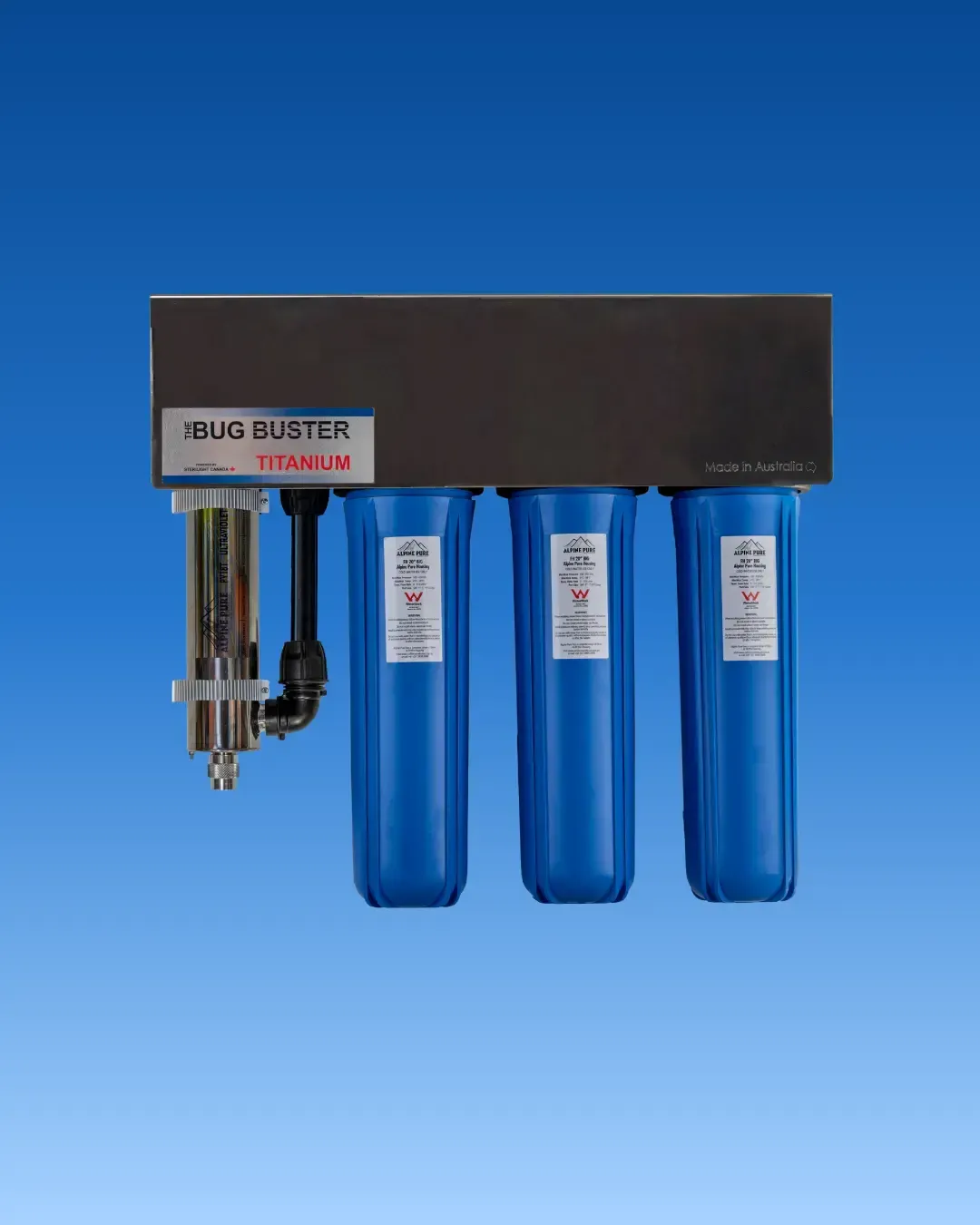
The Bug Buster is designed for Australian homes that want a practical way to improve household water quality. Instead of relying on one treatment method, it uses a staged system to target different water quality concerns.
The 3-stage models use sediment filtration to help reduce dirt, rust, sand and fine particles before the water reaches the UV stage. The 4-stage models include carbon filtration as well, which can help with taste and odour concerns.
The final UV stage is designed to target bacteria and viruses, adding an important layer of protection before the water reaches your tap. This makes The Bug Buster a practical option for homes using rainwater, bore water or tank water, as well as households that want a more complete approach to their water quality.
The Bug Buster
Our solution
Making informed choices about your water
Unfiltered water is a topic that often comes with a lot of mixed messages. Some claims make it sound healthier because it is more natural, while others focus only on the risks. The reality is that water quality depends on what is in the water, where it has come from and how it has been treated before it reaches your tap. The key is to understand the difference between myths and facts. Water can look clean and still contain contaminants you cannot see, smell or taste. Boiling can help with some microbiological risks, but it does not remove everything. Filtration is most effective when each stage is designed to target a specific concern.
That is where The Bug Buster offers a practical approach. With staged filtration and UV treatment, The Bug Buster helps improve household water quality by targeting sediment, taste, odour and microorganisms before the water reaches your tap.
Is untreated water healthier than treated water?
No. 'Raw' water may sound natural, but untreated water from rivers, lakes, streams, rainwater tanks or bore supplies can contain bacteria, viruses, parasites, animal droppings, agricultural runoff and other contaminants. Natural does not always mean safe.
Can clear water still contain contaminants?
Yes. Water can look clear, smell normal and taste fine while still containing contaminants that cannot be detected by your senses. This is why appearance alone should not be used as a guarantee that water is safe to drink.
Does boiling water remove all contaminants?
No. Boiling can help reduce microbiological risks, but it does not remove every type of contaminant. It is not the same as filtration and should not be relied on to treat all water quality concerns.
How does The Bug Buster help improve water quality?
The Bug Buster uses a staged filtration system to target different water quality concerns. Sediment filtration helps reduce dirt, rust, sand and fine particles. The 4-stage models also include carbon filtration to help with taste and odour, while the final UV stage targets bacteria and viruses.
Is The Bug Buster suitable for rainwater, bore water and tank water?
Yes. The Bug Buster is designed for Australian homes using rainwater, bore water or tank water. It offers a practical staged approach to improving household water quality before it reaches your tap.